I have always been curious about the world. As I approached the end of Secondary School, I still did not know exactly what I wanted to do in the future.
I believed that studying abroad would broaden my horizons, introduce me to new people, and help me understand which career path would suit me best. I also wanted to test myself and discover whether I could build an independent life in another country.
From the very beginning, the university welcomed international students warmly. It was clear that our experiences and opinions mattered.
The university even had a dedicated team supporting students who had recently arrived from abroad. I contacted them several times, and whenever I needed help, they were there for me.
Knowing that I was not expected to solve every unfamiliar problem alone made adapting much easier.
My study programme was initially a mystery to me. I had never been especially interested in Asian countries or cultures, and I was unsure whether the programme would suit me. I also wondered whether I could manage learning Mandarin through English.
Fortunately, the programme surprised me in the best possible way.
The classes were varied and allowed me to develop knowledge in several different areas. We studied economics, marketing, teamwork and project management, as well as Mandarin.
Instead of limiting me to one narrow subject, the programme introduced me to different professional directions and helped me discover new interests.
Living in the Netherlands was another learning experience. The country can be rainy and windy, and everyday life is highly organised. Things usually have a specific place, time, and procedure.
Living costs and public transport can also be high. However, careful budgeting, cooking at home, and avoiding unnecessary expenses make student life much more manageable.
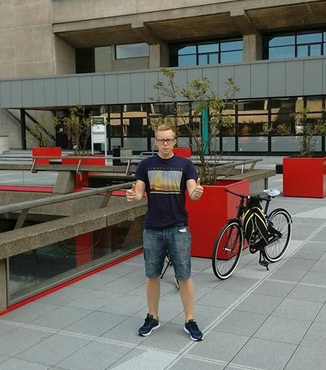
A reliable bicycle quickly becomes essential. It saves money, gives you independence, and is often the easiest way to travel around a Dutch city.
Not everything went smoothly. Administrative procedures could take a long time, and communication with institutions was sometimes frustrating.
Finding accommodation was an even greater challenge, particularly in Rotterdam. Some landlords were reluctant to rent to international students, so the housing search required patience and persistence.
My strongest practical advice is to begin looking for accommodation as early as possible. Do not assume that you will quickly find a suitable room after arriving.
Despite these difficulties, the Netherlands offers an incredible international environment.
My year included students from around eighty nationalities and cultural backgrounds. In my classroom alone, I met people from different parts of Europe, Asia, Africa, Australia, and Oceania.
For someone who is open and curious, this is an unforgettable experience.
You begin to understand that people can interpret the same situation in completely different ways. Their behaviour, communication style, and decisions may be influenced by cultures and experiences very different from your own.
An international classroom teaches you to listen before judging and to see the world from perspectives you may never have encountered before.
Of course, cultural diversity can also be challenging. You need patience, humility, and a willingness to accept that your own habits are not the only correct ones.
But learning how to cooperate with such different people is one of the most valuable skills you can gain for an international career.
Student life can be expensive, especially when eating out, using public transport, or going to events. Asking local students for recommendations can help you discover more affordable places that may not be as well known among tourists and international students.
The application itself involved a great deal of paperwork. Honestly, without Kastu’s support, I might have abandoned the entire idea.
The Kastu team helped me organise the documents and guided me through the full application process. Studying abroad sounded exciting, but turning that idea into reality required many practical steps.
Kastu made those steps clear enough for me to keep moving forward.
Looking back, choosing to study abroad gave me exactly what I had hoped for. I met people from around the world, became more independent, discovered unfamiliar subjects, and gained a much broader understanding of my possible future.
There were difficult moments involving housing, administration, finances, and adapting to a new culture. But those challenges became part of the experience rather than reasons to regret it.
My advice to anyone considering studying abroad is simple: take the first step.
You do not need to know exactly what your entire future will look like. Sometimes a new country, programme, and international community are precisely what help you discover it.
The process may seem complicated from the outside, but one brave decision can open a world of possibilities.